Wednesday, July 15, 2020

How to Measure Your Bra Size & Find a Good Bra.

A poorly fitted bra can cause breast soreness, stretch marks, as well as neck, back and shoulder pain. If you are experiencing these symptoms you should consider measuring your bra size, and especially so if you have gained/lost a lot of weight, are pregnant, or simply it has been a long times since you last measured yourself.  Here are some simple steps to finding yourself a well-fitted bra. 

While wearing no bras, or at least a thin non-padded bra measure your bra size by doing the following:

1.    Band size: Wrap the tape measure snugly around your torso where the bra band will sit, which is directly under your breasts. Round to the nearest whole number. 
2.    Bust size: Wrap the tape measure around the fullest part of your breast, which is usually right at the nipple level. Round to the nearest whole number. 
3.    Cup size: Calculate your cup size by subtracting your bust size to your band size.  Every inch of difference represents a difference in cup size. Use the following chart to determine your bra size.

4.    Your bra size is your band size and cup size, for example 32A, or 32C, where 32 is the band size you measured in step one, and A or C the cup size you determined by looking at the chart in step three. It is important to keep in mind that every store can have a different way of sizing their bras, yet this will give you a good starting point of what size to try on first, and assess for the good fit.  Tip: Typically, if you need to go up a band size, you need to go down a cup size, or visa versa.     


Assess the following features to find if your bra is a good fit:

1.    Underbrand: The front and back of the band should be at the same level. Using the middle hook, it should have a snug fit, with no more than 1-2 fingers able to fit under the band. If you lift your arms up, or jump up and down the band should not ride up. Also, if you slide the straps off your shoulder, your bra should stay in place. Most of the support comes from the band, so it is very important you get the right size underband.
2.    Straps:The straps should not dig into your shoulders; it should have a snug fit with no more than 1-2 fingers able to fit under the straps. It is ok if one strap is tighter than the other, as your breasts could be different sizes. Looking sideways, your breasts should bebetween your elbows and shoulders. 
3.    Cups:Your breasts should not be spilling out of your bras, nor hang away from your bra causing a gap. Aim for a snug fit; not too tight and not too loose. 
4.    Center front:The center front of the bra should sit flat against your chest. If it is not, you might need a bra with a larger cup size. 
5.    Underwire:The underwire should not be over any of your breast tissue. If you press down on the underwire, you should not feel it squish any of your breast tissue. 


Consider your unique breast shape and find a bra style that best fits your lifestyle: 

1.    Assess your breast shape:  Are your breasts symmetrical, or asymmetrical? Do you have a lot, or a little breast tissue? Are your breasts full on top and bottom of your nipple line?  Do your breasts hang high or low? 
2.    Consider a style that might compliment your beast shape. 
o  Padded (lined) vs. unpadded (unlined)— Extra bra padding can help add extra volume/shape for individuals who might not have a lot of breast tissue, their breasts hang low, or have breasts that are fuller on the bottom vs. the top. 
o  Full coverage vs. partial coverage vs. plunge — Full coverage bras help bring breasts up and together, as well as prevent breast spillage for individuals who might have a lot of breast tissue. The partial coverage bra (aka demi, balconette, half- or shelf bra) provides ½ or ¾ coverage of the breasts, with the cup height cut one inch above the nipples for individuals who might have less breast tissue on the top and more on the bottom of the nipple line. The plunge bra has angled cups for individuals whose breast are more wide set, or point away, while allowing them to wear clothes with deep v-necks. 


o  Other features to consider: Wide foamed bra straps for individuals with a lot of breast tissue. Wireless bras for cup sizes under DD. Removable inserts for individuals with asymmetrical breasts. Stick-on/adhesive tape bras, and racerback sports bras help provide extra support and reduce bounce. Training bras/bralettes for 11-14 y.o. girls who are going through puberty and are starting to develop breast buds. In addition, there are strapless bras, multi-way bras, nursing/maternity bras etc. 


What bra style is your favorite? 


Photo source: blog.stylewe.com, sizecharter.com, today.com
#womenshealth #physicalhealth, #selfesteem #positiveselfexpression #environmentalhealth #femininity #measuringyourbrasize #Healthystrongbeautiful #HSBvibes #HSB #thrive #optimism #lifeperspective #awareness #healthpromotion #diseaseprevention #wholistichealth #healthyliving #nurseselfcare #mentalhealth #physicalhealth #spiritualhealth #Healthandfitness #healthcoach #wellnesscoach #lifestylecoach #healthandwellness #selfcare #takingcareofyourself

Sunday, July 5, 2020

Dating (courting) Advice

There comes a time in everyone’s life when they need to have the “dating (courting) talk” as they start taking interest in the opposite gender, and consider future marriage partners. Below you will find a collection of dating (courting) guidelines, as well as qualities to have/seek for the boy, or girl who is interested in dating (courting). 

1.    Be at least 18 years old for girls, and 20 years old for boys to date (preferably with no more than 5 years age difference).  Guys & girls should preferably marry between 20-25 years of age. 
2.    Court someone you like, and likes you back.
3.    Court someone who is serious about the relationship, with the intent that you both would potentially consider marrying each other. Otherwise, do not awaken love ahead of time.
4.    If possible, date at least 1 year (seeing each other at least 2x/month) before making a decision to marry. 
5.    Don’t falsely lead someone on, if you are not serious with the relationship. 

6.    After 2 years of dating, if you are ready to marry and there is no commitment, then highly consider whether you need to move on and not waste your time with the relationship.  
7.    Court someone who has good qualities (i.e. loyal, patient, honest, kind-hearted, punctual, hard-working, encouraging, humble, selfless, merciful, well-mannered, respectful etc.) 
8.    Stay away from individuals who get angry fast/violent, or do not possess good qualities.
9.    Go slowly with the relationship, resist the urge to talk, or see each other at every opportunity. 
10. Talk about your hopes and dreams for the future (family goals, marital roles, financial views/habits, interests, spiritual views, etc.)
11. Court someone who has similar values, morals, and faith as you. 
12. Avoid being alone together. Go out in groups, have a 3rdindividual present, or meet in open public places (ie. Park, coffee shop, local festival/events etc.). 
13. Never assume you, or they know what the other is thinking. Always ask, and communicate. 
14. Do not hold hands/hug/kiss, or touch intimate parts (breasts/butt/thigh or other body parts). Stay at least 3-6ft apart. 
15. Establish boundaries early on in the relationship (i.e. commitment to sexual purity etc.), and court someone who is able to respect those boundaries.  

16. Save yourself for your future husband/wife.   
17. Know that everything you do in the relationship has consequences. Act in such a way so as if you separate, you will leave with no regrets.
18. Puts more emphasis on the inner self, rather than outward appearance.    
19. Dresses classy and clean, not trashy or dirty. Makeup is more natural.
20. Is kind when talking to your or their parents/siblings. Takes regard for other people. 

21. Not greedy/stingy with money, and able to share with others who are less fortunate.
22. No drugs, drinking, smoking/vaping, or watching/listening to inappropriate content. (i.e. porn, profane music etc.)
23. Court someone who allows you to be yourself, is not hypocritical, or fake.
24. Someone who has a job and/or goals in their life (ie. Going to school, has a career, business etc.)
25. Someone who hangs out with friends that have good qualities. 

26. Someone who hangs out, or goes to events that attract individuals of good quality.  (ie church, choir etc) 
27. They know your worth, and thus respect, appreciate and value you making you feel more than enough, rather less than enough.  
28. A honorable gentleman/lady who is fair, considerate, and empathetic
29. Able to apologize, demonstrate understanding and compromise.
30. Someone who promotes good deeds, and habits. 

31. Someone who is attentive to your needs, and seeks to help. 
32. Able to problem solve/fix/make stuff. 
33. Don’t expect perfection, yet there should be more positive qualities, than negative. Listen to your instinct, if something feels wrong, then end the relationship before getting even more attached. It is ok to court and find out the relationship might not work out as originally thought. 
34. Be home no later than 9-10pm
35. Think long and hard before you say, “I love you,” or “I do.” Don’t give your word of marital commitment to anyone unless you are absolutely positively sure. 
36. Pray and seek guidance/counsel from respectable elders as you go through one of the most exciting, and undoubtedly most important times of your life both discovering yourself as a person, and finding a partner to share the rest of your life together. 


What other advice do you find helpful to share? 


Photo source: boundless.org
#socialhealth #relationshiphealth #christiandating #christian courting #teenagedatingadvice #dating #courting #lady #gentleman #Healthystrongbeautiful  #HSBvibes #HSB #thrive #optimism #lifeperspective #awareness #healthpromotion #diseaseprevention #wholistichealth #healthyliving #nurseselfcare #mentalhealth #physicalhealth #spiritualhealth #Healthandfitness #healthcoach #wellnesscoach #lifestylecoach #healthandwellness #selfcare #takingcareofyourself

Tuesday, May 26, 2020

Interior Design Principles: Proportions

      There are a lot of decisions to make when designing your home interior, and it can be challenging to know what size furniture would best fit your space. In order to make your space both beautiful in form, and practical in function, here are some general design principles that can help guide you in making smart design choices in terms of proportion and fit. Now, take out that measuring tape and lets start planning! 

1.   Bedroom
·     Start with crisp white bed sheets, pillow covers, and duvet covers. Add accent color in decorative sham pillows, and throw blanket. 
o  Choose a sham pillow between 18”-22”. Choose two sham pillows in a larger size and one sham pillow 2” smaller. Optional: add a lumbar pillow.
·     The nightstand height should be at the level of your mattress, or about 2”-4” taller. The nightstands should be between 1/3 - 2/3 the width of your mattress.
o  To style it, add a bedside lamp, storage solution, greenery, or personal touch (frame, candle, clock). 
·     The bedside lamp height should be the same height as your nightstand, plus 2”-3”. The lampshade diameter should be 1/3 the width of your nightstand. 
·     The rug should extend at least 1 foot beyond the end of the bed and at least 18”-24” beyond the side of the bed. 
o  Leave at least 12”-18” of space from the wall to rug edge, and have at least 8” of space between the edge of the nightstand and rug.
o  Typically, the rug sizes are 5 x8 for a Twin, 6 x9 for a Full, 8x10 for a Queen, and a 9x12 for a King bed. 
·     To style your dresser, consider adding artwork, mirror, lamp, tray or storage solution, greenery (terrarium, vase of flowers), or personal touch (frame, candle, books). 

Modern Mountain Home Tour: Master Wing

2.   Dining room
·     A table length of 48” sits 6 people, 72” sits 8 people, and 96” sits 12 people. (Essentially, allow 18” of table width per person.)
o  To style it, you can add candlesticks or vase, paired with a tray or bowel with fruit. Consider getting placemats. 
·     Chair seat height should be at least 18”, for a 28”-30” high table.
·     To make it look more formal you can add a rug under the table. The rug should have 24”-36” of extra room from the dining table edge to the rug edge to allow enough space to pull out the chairs.
o  Leave at least 12”-18” of space from the wall to rug edge.
o  Typically the rug sizes are 6x9, 8x10, and 9x12.
·     The chandelier should hang 30”-34” above the table surface for ceilings that are at least 8’ high. If ceilings are higher than 8’, hang an additional 3” higher per foot.  If hanging more than one chandelier, hang them 30-34” apart from each other. 
o  The chandelier should have a diameter that is half the width of your dining table. (Or, add the length and width of the room in feet, and that should be the diameter of your light fixture in inches.) 
·     You can consider adding a buffet, hutch, china cabinet, or serving table for extra storage space. 


3.   Living room
·     When choosing a sofa, ensure there is at least 18” of space on either side of the sofa. If getting a sectional with chaise, ensure that the chaise does not extend more than half the length of the wall. 
o  Fill up to 5ft of height and 2/3 of length of wall space above your sofa.
o  Have 26”- 48” of clearance between furniture pieces to allow enough room to walk through. 
·     Rugs should extend at least 6” on the side of main furniture pieces, and the front of the legs of the furniture should be on the rug.
o  Leave at least 12”-18” of space from the wall to rug edge. 
·     Coffee table height should be 1”-2” less than the height of the sofa seat cushion, and be 2/3 the length of the sofa.
o  To style it, add a tray, storage solution, greenery, or personal touch (decorative object, candle, clock, books).
·     Side tables should be 2” below the height of the sofa arm
·     Artwork should be 6”-12” above the top of the furniture you hang it over.  If not hanging over something, hang the artwork at eye level 60 inches from the center of the artwork to the floor. 
o  If hanging more than one artwork, hang them 1.5”-3” apart from each other. 

·     Lighting: Look at fixture to find out the maximum amount of watts that particular fixture can handle, then pick the lumen size. Watts = how much energy a bulb uses, and a lumen = how bright a bulb is. The following will help you determine how much brightness you will need for a space. 

o  Square footage of space X 20 Lumens = How many lumens will be needed to brighten up walk through areas like floors/hallways.
o  Square footage of space X 30 Lumens = How many lumens will be needed to brighten up useable surfaces like tables.
o  Square footage of space X 50 Lumens = How many lumens will be needed to brighten up areas used for tasks like in a kitchen, desk, nightstand etc. 

·     Curtains should hang 2-3” below the ceiling, or molding, with the rods sticking out 4 -10” (excluding the finials) wider than the window.  The curtain panels should have a combined width of 2-3 times the width of the windows. Choose lined curtains that touch the floor, or are 1-2” longer to get the “puddled” curtain look. 
·     Indoor plants: Plant foliage should be twice the height of the pot.
o  High: Rubber fig plant, fiddle leaf fig tree, split leaf philodendron
o  Medium: Algo silver leaf bay, small fiddle leaf, snake plant
o  Small: maiden hair fern, rosemary, lavender, cactus
·     Fireplace mantel: The width of the mirror/art piece should be as wide as the fireplace opening. 
o  To style it add a focal piece (mirror/artwork), storage solution, greenery (vase with flowers), or personal touch (decorative object, candle, books).


Mid-century great room with modern sectional, round coffee table, and modern artwork.
Mid-century great room with modern sectional, round coffee table, and modern artwork.4.   Bathroom
·     Wall scones are placed at eye level 60 inches from the center of the scone to the floor, and at least 36” - 40” apart from each other.
·     Place your over the mirror lighting fixtures 75”-80” from the floor, or if your mirror is exceptionally tall, place it 3 inches above your mirror. 
·     Provide a unique focal point by choosing a feature that is proportionate to the room. For example, a standout vanity, mirror, sink/faucet, lighting, decorative tile, or accent color. 


In closing, if something makes you feel good, yet might not fit the rules, go ahead and add the visual contrast. Above all, it is important you create an environment you love, and enjoy.


What tips do you use when designing? 


Photo source: studio-mcgee.com
#environmentalhealth #interiordesigning #positivevibes #creativity #moving #newhome #remodeling #Healthystrongbeautiful  #HSBvibes #HSB #thrive #optimism #lifeperspective #awareness #healthpromotion #diseaseprevention #wholistichealth #healthyliving #nurseselfcare #mentalhealth #physicalhealth #spiritualhealth #Healthandfitness #healthcoach #wellnesscoach #lifestylecoach #healthandwellness #selfcare #takingcareofyourself

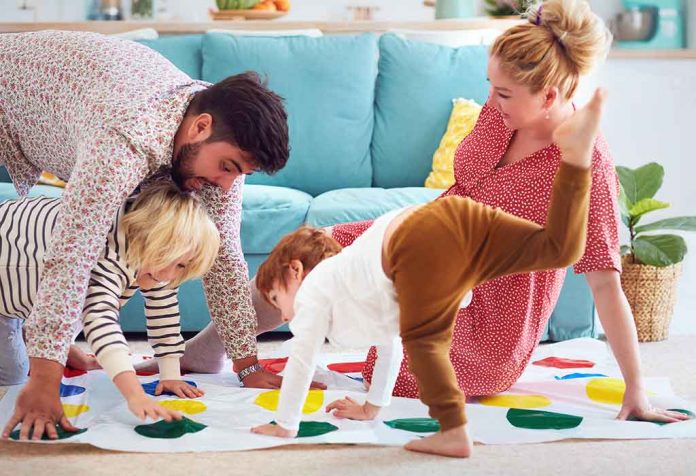
100+ Family Friendly Activity Ideas To Help Make Memories With Your Kids This Year

You have ~18 Summers to create the majority of the lasting memories and connections that you will have with your child. After that, the shar...